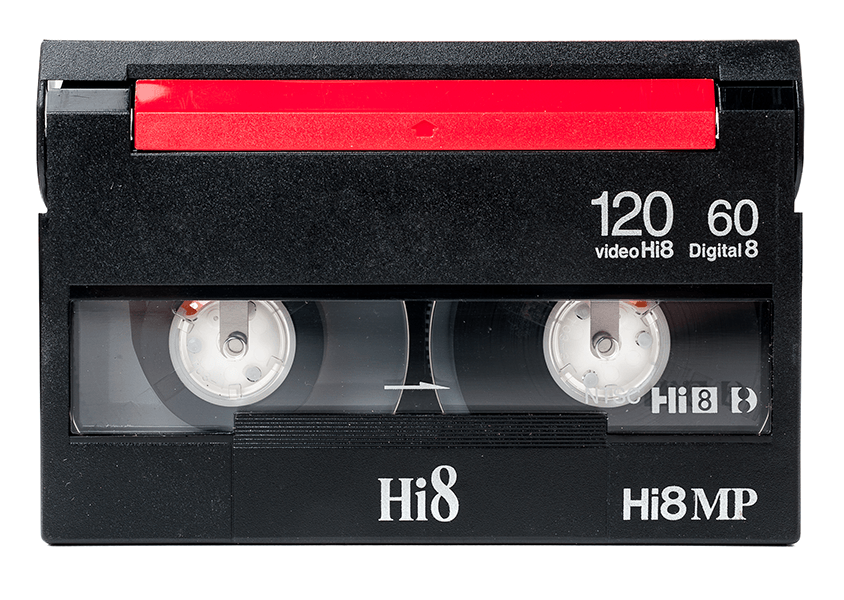
Video8, Hi8 & Digital8 Tapes

Video8: The Beginning of 8mm Home Video
Introduced by Sony in 1985, Video8 revolutionized home video recording by offering a compact alternative to bulky VHS camcorders. Families used Video8 to capture birthdays, vacations, weddings, and other important moments. Its lightweight camcorders, longer recording times, and improved picture quality made it one of the most popular consumer video formats of the 1980s.

Although Video8 tapes were built to last for many years, they are magnetic media that naturally deteriorate over time. Today, working Video8 camcorders are becoming increasingly rare, making it difficult to watch or preserve these recordings without converting them to digital.
Hi8: Better Picture Quality for Home and Professional Use
Sony introduced Hi8 in 1989 as an improved version of Video8. Using the same cassette size, Hi8 delivered noticeably sharper images and better color, making it popular with both home users and professionals, including news organizations and event videographers.

Hi8 became the preferred choice for people who wanted higher-quality recordings while keeping the convenience of compact camcorders. As digital technology advanced, however, Hi8 was eventually replaced by digital recording formats. Today, Hi8 equipment is no longer manufactured, and playback devices continue to become harder to find.
Digital8: Bringing Digital Recording to 8mm Tapes
In 1999, Sony introduced Digital8 as the final evolution of the 8mm tape family. Unlike Video8 and Hi8, which recorded analog video, Digital8 recorded video digitally while using the same style of cassette.

Digital8 offered improved picture quality, digital audio, and easy computer transfers through FireWire connections. Many Digital8 camcorders could also play older Video8 and Hi8 recordings, making them a convenient upgrade for existing users.

Although Digital8 provided many of the benefits of digital recording, it was eventually replaced by newer technologies such as MiniDV, memory cards, and smartphone cameras. Today, working Digital8 camcorders are becoming increasingly scarce.

Prices

NTSC - $30 per tape up to 2 hours for 1-2 cassettes
$15 per up to an hour for 3 cassettes and more

PAL - $40 per tape up to 2 hours for 1-2 cassettes
$20 per up to an hour for 3 cassettes and more

Costs for damaged cassettes will be quoted individually
© 2026 Copyright Mediatransfer Calgary, Alberta, Canada